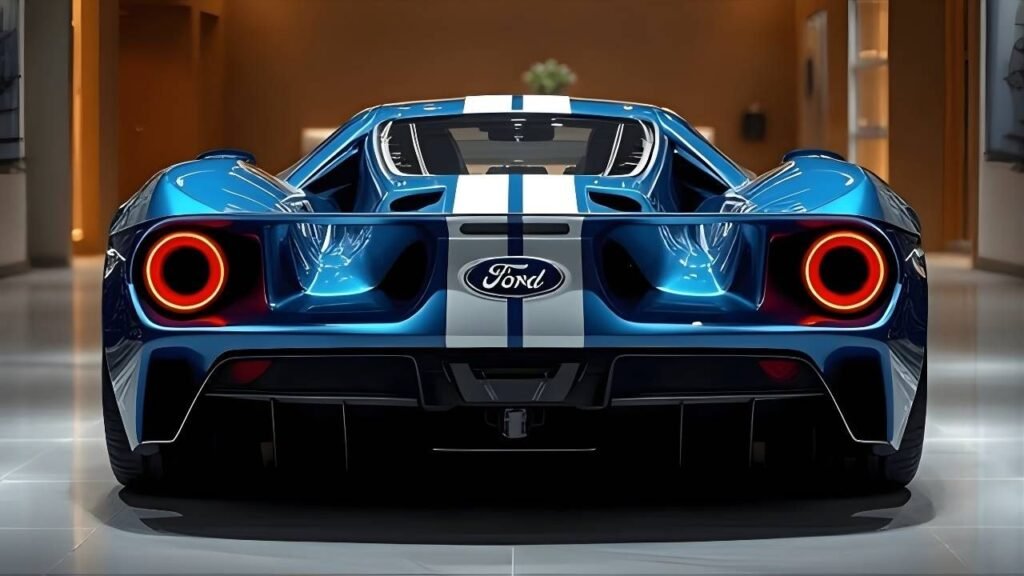
The Ford GT40 is more than just a race car—it is an icon of motorsport history, celebrated for its pioneering engineering, aerodynamic efficiency, and unmatched performance on the world’s endurance racing circuits. Originally conceived to challenge Ferrari’s dominance at Le Mans, the GT40 remains a symbol of American ambition, innovation, and racing excellence.
The Birth of a Racing Legend
In the early 1960s, European manufacturers, particularly Ferrari, dominated endurance racing. Ford sought to change that narrative by commissioning a race car capable of winning the 24 Hours of Le Mans. The result was the GT40, developed by a team of visionary engineers and racing experts, including Carroll Shelby.
Every aspect of the GT40 was purpose-built for competition. From its chassis to its engine layout, the car was designed to endure the rigors of long-distance racing while delivering peak performance. What began as a bold challenge ultimately became one of the most remarkable success stories in motorsport history.
Low-Profile Design Optimized for Speed
The GT40’s design remains instantly recognizable. Standing only 40 inches tall, the car’s low profile minimized aerodynamic drag and enhanced high-speed stability. Sleek body lines allowed air to flow smoothly over the vehicle, while wide fenders and a compact rear provided a purposeful stance.
Every design element served a function. Vents and curves were engineered for engine cooling, airflow management, and downforce generation, ensuring the GT40 remained competitive at extreme speeds. Lightweight materials were employed throughout, further improving handling and acceleration, making the GT40’s silhouette one of the most iconic in automotive design.
V8 Power and Endurance Performance
Powering the GT40 was a formidable V8 engine, initially a 4.7-liter unit, later upgraded to a 7.0-liter powerhouse. Capable of exceeding 320 kilometers per hour, this engine provided the acceleration and reliability required for grueling endurance races.
Designed not just for speed but for durability, the GT40 excelled under continuous high-performance conditions. Efficient cooling systems, robust components, and precise engineering ensured the car could withstand a full day of racing without mechanical failure, giving it a decisive edge over competitors.
Engineering Built for Endurance
Unlike many contemporary race cars focused on short bursts of speed, the GT40 was engineered for longevity. Its mid-engine layout optimized weight distribution, improving balance and control through high-speed corners.
Advanced suspension tuning, reinforced chassis components, and powerful braking systems allowed drivers to maintain performance over long stints. This careful balance of speed and durability became the GT40’s hallmark, contributing to its legendary racing pedigree.
Driver-Focused Racing Cockpit
The interior of the GT40 reflected its racing priorities. Lightweight bucket seats, a compact steering wheel, and essential gauges created a cockpit designed purely for performance. Comfort was secondary to functionality, ensuring drivers could focus entirely on the race.
Every instrument provided critical real-time information, from engine metrics to fuel levels, enabling drivers to push the car to its limits safely and effectively.
Historic Le Mans Victories
The GT40 cemented its legacy at the 1966 24 Hours of Le Mans, achieving a remarkable 1-2-3 finish. This historic triumph marked the beginning of four consecutive victories at Le Mans from 1966 to 1969, proving that American engineering could surpass the finest European manufacturers.
These victories not only established Ford as a dominant force in motorsport but also created a lasting legend that continues to inspire automotive enthusiasts worldwide.
Influence on Modern Ford Supercars
The GT40’s influence extends to today’s high-performance Ford models, most notably the Ford GT supercar. Modern iterations incorporate advanced aerodynamics, carbon fiber construction, and cutting-edge technology, all while honoring the spirit and heritage of the original GT40.
The philosophy of combining innovation, performance, and racing ambition continues to guide Ford’s engineering, ensuring that every new supercar pays homage to this iconic machine.
A Timeless Automotive Icon
Today, the Ford GT40 is revered not only for its racing achievements but also as a collectible masterpiece. Original models fetch extraordinary sums at auctions, reflecting both their historical significance and engineering brilliance.
For car enthusiasts, historians, and racing fans, the GT40 represents passion, determination, and technological excellence, embodying the daring spirit of its creators and the competitive edge of American motorsport.
Conclusion
The Ford GT40 remains one of the most significant race cars ever built. Its low-profile design, powerful V8 engine, and unmatched endurance racing record reshaped the world of motorsport. Decades later, the GT40 continues to inspire engineers, designers, and enthusiasts, proving that innovation, ambition, and perseverance can create machines that endure through time.
The GT40’s legacy is not merely in its victories but in its enduring influence on performance car design, making it a timeless icon in automotive history.